



Our Association

- Board of Directors
- President’s Message
- Past Boards of Directors
- Establishment
- Mission – Vision
- Bylaws
- GASYEK | Gastroenterology Medical Specialty Qualification Board
- Research Project Guideline
- Working Groups Guideline
- Branches
- Working Groups
- Young Gastroenterologists Group
- In Memoriam
- Corporate Identity Guide
- Download Society Membership Form
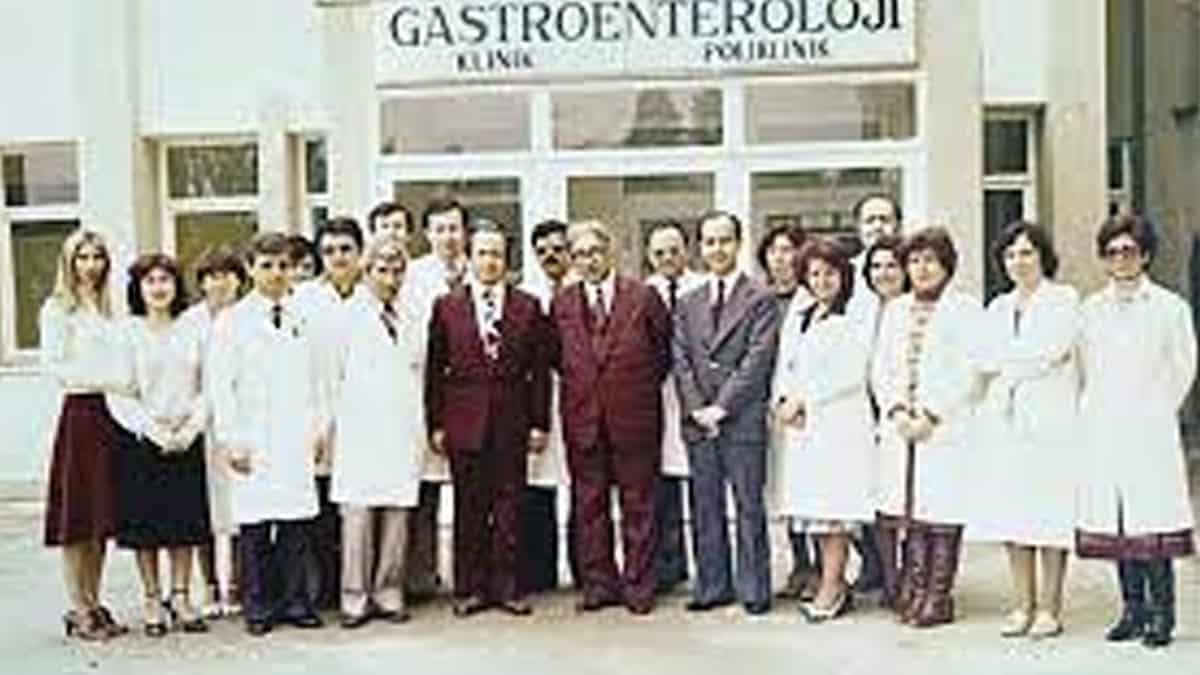
For the first time in our country, the Gülhane Gastroenterology Clinic completed its establishment in 1956 as an independent specialization branch, based on the principles published in the Medical Specialization Regulation on November 20, 1956. The founders of the clinic are Prof. Dr. Tevfik User and Assoc. Prof. Dr. Namık Kemal Menteş.
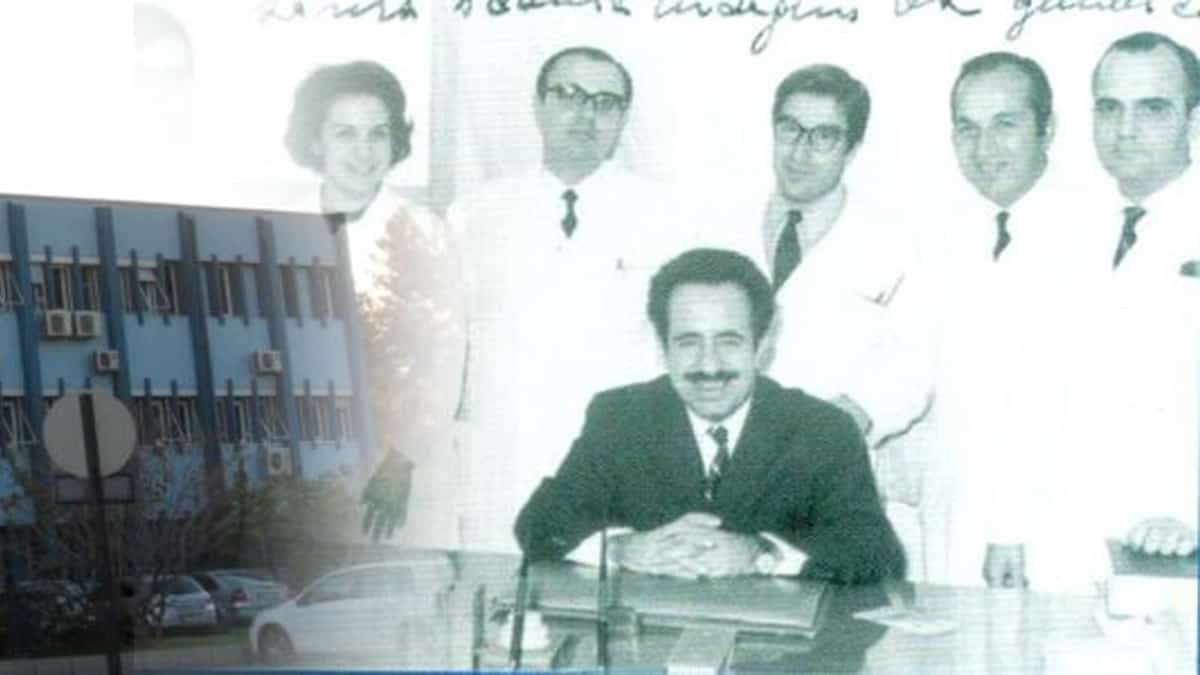
Türk Gastroenteroloji Derneği was founded on May 8, 1959, by our esteemed late professor Prof. Dr. Zafer Paykoç, whom we remember with mercy today, and our elders.
Founding Committee Members:
- Prof. Dr. Zafer Paykoç
- Prof. Dr. Hamdi Aktan
- Prof. Dr. Recai Ergüder
- Prof. Dr. Selahattin Koloğlu
- Prof. Dr. Hilmi Akın
- Prof. Dr. Naci Ayral
- Prof. Dr. Namık Kemal Menteş
- Dr. Ahmet İhsan Aksan
- Dr. Alaaddin Erkmen
- Dr. Nurettin Aruman
- Dr. Fevzi Aybers
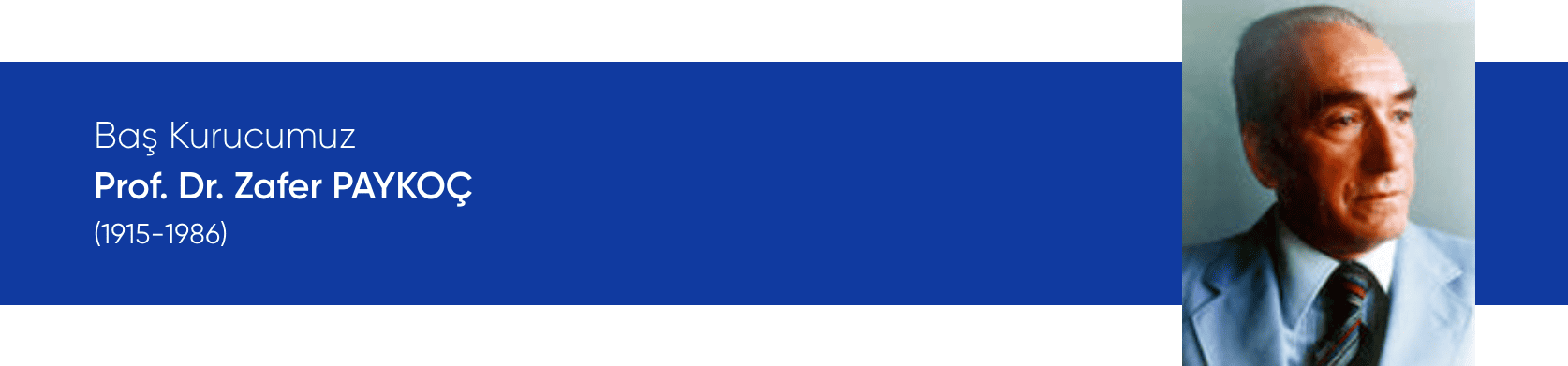
Who is Prof. Dr. Zafer PAYKOÇ?
Prof. Dr. Zafer Paykoç was born in Aydın in 1915. He graduated from İzmir Erkek Lisesi in 1933. Prof. Paykoç graduated from Istanbul Faculty of Medicine in 1939 and was appointed as an internal medicine assistant at Ankara Numune Hospital in 1942. In 1943, Prof. Paykoç was sent to England by the Ministry of Health, where he specialized in Oxford and London. He returned to Turkey in 1946 and started working as an internal medicine specialist at Numune Hospital. In 1949, he passed the internal medicine associate professorship exam and was appointed as an active associate professor at the Ankara Faculty of Medicine, 2nd Internal Diseases Clinic.
In 1955, he was promoted to professor at the same clinic. In 1958, he became the Dean of Ankara Faculty of Medicine. He held this position until 1960. In 1959, he was appointed director of the Gastroenterology Department. After the 1960 coup, he left the university under law number 114 and was appointed as an internal medicine specialist at the Ministry of Health Ankara Yüksek İhtisas Hospital. In 1962, he returned to his position as director of the Gastroenterology Department at Ankara Faculty of Medicine. He remained in this position until his retirement in 1983. Prof. Dr. Zafer Paykoç was a founding member of the Türk Gastroenteroloji Derneği and served as its president for many years.
He is also a founding member of the Asia-Pacific Society of Gastroenterology. Prof. Paykoç underwent brain tumor surgery in 1985 and passed away in Ankara on March 5, 1986. Prof. Dr. Zafer Paykoç was awarded the TÜBİTAK 1986 Service Award for his efforts in the development of the Gastroenterology Department in our country and his services in training many specialists in this field.
Prepared by: Güncel Gastroenteroloji Dergisi
In Memory of Prof. Dr. Zafer PAYKOÇ
In the second half of the 19th century, the first signs of enlightenment in medicine began to be heard in Europe. Discoveries in anatomy, physiology, pathology, microbiology, and neurology brought to the agenda the inevitable necessity of specialization. In 1885, Ismar Boas established the first gastroenterology clinic in Germany. Scientists who returned to America after studying medicine or gaining experience in Europe changed the face of American medicine. Max Einhorn, who returned to his country from Germany, became America’s first professor of gastroenterology in 1888. The implementation of “full-time” work at Johns Hopkins University in America in 1893 marked the beginning of a scientific revolution in medicine. In 1897, the American Gastroenterological Association was founded and began to show the necessary effort to fulfill its responsibilities on the path to specialization.
Discoveries in gastrointestinal physiology laid the groundwork for the development and institutionalization of clinical gastroenterology. In 1902, W. Bayliss and E. Starling discovered Secretin, in 1905, J.S. Edkins discovered Gastrin, and in 1928, A.C. Luy discovered Cholecystokinin. In 1916, gastroenterology clinics were opened at New York Post-Graduate Medical School, and in 1921, at Massachusetts General Hospital. These were rapidly followed by others. The development in specialized fields gained significant momentum with the contributions of scientists who immigrated from Europe during World War II. While general practitioners initially opposed specialization in the Western world, general specialists later formed a front against specific specialization. In our country, our university’s Faculty of Medicine pioneered the birth of gastroenterology.
In 1959, Prof. Dr. Zafer Paykoç not only opened the Gastroenterology Clinic but also, with the contributions of Prof. Dr. Hamdi Aktan and Prof. Dr. Namık Kemal Menteş, established the Türk Gastroenteroloji Derneği in the same year. In addition to Ankara, Prof. Dr. Namık Kemal Menteş in Izmir, Prof. Dr. İlhan Ulagay and Prof. Dr. Müfide Küley in Istanbul, and Prof. Dr. Tevfik User and Prof. Dr. Ercüment Palabıyıkoğlu at G.A.T.A. did their best for the development of gastroenterology and hepatology in the same years. The first generation of the Republic fulfilled their historical duties with great dedication and also supported and protected the Republic. In our clinic, a contemporary period was experienced with Prof. Dr. Necip Danışoğlu, Prof. Dr. Özden Uzunalimoğlu, Prof. Dr. Nihat Sipahi, and Prof. Dr. Atilla Ertan in the positive environment created by the outstanding personalities of Prof. Dr. Zafer Paykoç and Prof. Dr. Hamdi Aktan.
During this period, gastroenterology gained its identity in our country, and an environment was prepared for the training of new generations. If general specialization (internal medicine, surgery) became institutionalized in the first half of the twentieth century despite all opposing efforts of general practitioners, in the second half of the century, system specialization (gastroenterology, cardiology, etc.) came into being despite the opposition of general specialized branches. Today, organ specialization and disease-based specialization are a reality in academic life. Developing technology is also on the way to creating new specialized branches based on instruments and procedures.
The fact that universities will develop with young people who have assimilated academic life should not be overlooked. No one should doubt that the future of the country will be enlightened by young generations who will serve science. The new generation will soon see the scientific products of this effort. It should not be forgotten that institutions that can adapt to change, not those that are strong, will survive.
Authored by: Prof. Dr. Ali Özden
Thirty-Five Years of the Türk Gastroenteroloji Derneği / 1959-1999
I am very happy to address you all today and embrace you with love. When my dear brother Sait Bağcı conveyed to me the offer from our Association President, Mr. A. Ömer Özütemiz, to write the history of the association in 2009, I gladly accepted. However, once I got into it, I realized it was not that easy. This is because there was almost no recorded information belonging to our association between 1959 and 1990. Therefore, today I will present to you, not the history of our association, but my recollections and what I heard from my elders regarding a 35-year period between 1959 and 1994, as one of the oldest members of the board of directors. Developments concerning the 15-year period between 1994 and 2009 can be found in the activity and audit reports presented by the executives and auditors at our general assembly. When these are compiled, they form a book of 30-35 pages, which is very difficult to summarize here.
As you know, our association was founded in 1959 by seven founding members. To remember them today with gratitude and appreciation, and to convey our best wishes to them, I invite you all to 30 seconds of silence, closing our eyes. Thank you. My interactive relationship with the association management began in 1974 when I attended meetings as an assistant to Mr. Palabıyık Hoca. In 1959, I could identify 6 gastroenterologists and 6-8 assistants in Ankara. The idea of establishing an association with such a small community was very interesting and forward-thinking. As you may recall, with a change in the Medical and Specialization Regulation in those years, a more advanced, specific specialization such as gastroenterology, cardiology, nephrology, or hematology was gained by working as an assistant for two more years after internal medicine specialization, and this was called “higher specialization.” Later, it began to be called a sub-specialty. The term “higher specialization” was not well-received by our other colleagues and created antipathy. The thought, “Could this antipathy be overcome, and could it ensure stronger solidarity among gastroenterologists?” triggered the idea of establishing the association. Or did our founders, even back then, long for and envision the level our association has reached today? They wanted to express this by placing the prefix TÜRK before the name of our association. Despite the emphasis on TÜRK in its name, the association remained isolated in Ankara for many years. General assemblies were held in gastroenterology clinics in Ankara, and participation from units outside Ankara was not much encouraged, partly due to the reluctance caused by attempts to move the association’s center from Ankara. Perhaps the fact that the first branch of the association, the “Istanbul Branch,” did not use this designation but referred to itself directly as the Türk Gastroenteroloji Derneği was a factor. This issue would cause tension between the association’s center and the branch for a while. In the general assemblies held in Ankara, the directors of the gastroenterology clinics of the two universities and one academy in Ankara were elected to the association’s board of directors. The association had no office. Board meetings were held in university and academy gastroenterology clinics or at the home of the board president in the evenings. Since regular membership fees were not collected, it had no income. All its assets consisted of a small steel cabinet, an electric typewriter, and a 250 m² plot of land in Bursa, donated by a patient hospitalized at Ankara University Gastroenterology Clinic. Its annual fees were paid with difficulty.
The association’s principles and activities at that time were:
- Ensuring communication and solidarity among gastroenterologists,
- Organizing monthly scientific meetings in Ankara,
- Organizing national congresses, initially every four years, then every two years,
- Occasionally organizing small meeting trips to Anatolia,
- And maintaining contact with OMGE.
At the general assembly in 1990, our professors who had previously served on the boards of directors did not run for office. Hacettepe Faculty of Medicine and Yüksek İhtisas Hospital came to the general assembly with their candidates. The candidates for Ankara Faculty of Medicine and GATA were determined at the meeting. M. İsmet Yılmazer (president), Ali Özden, Burhan Şahin, Burhan Kayhan, and Mehmet Haberal were elected to the board of directors. Several senior academics were not pleased with this. Some even reacted by saying, “They sold the association.”
The new board of directors determined its work plan and principles as follows:
- The association must have a journal, and it must be included in INDEX MEDICUS,
- Congresses must be held without interruption,
- Scientific meetings should be nationwide, not just in Ankara,
- An office must be provided for the association,
- The isolation of the association in Ankara must be broken,
- All universities must be reached, and the bylaws must be amended for this purpose,
- As opportunities increase in Ankara, specific gastroenterology hospitals and clinics should be opened in other provinces,
- Frequent scientific/social meetings should be held in Anatolia to inform Anatolian physicians and raise public awareness.
Among these decisions, the journal was a priority. Work began with great determination and enthusiasm. I will never forget the efforts of A. Özden, B. Şahin, and B. Kayhan in this regard. I should also state that the enthusiasm and excitement of that day, carried forward by every board of directors for nineteen years without diminishing, and continued by the current management, has brought our association to the capacity that makes us all proud today. Publishing a journal was very difficult for the first two years. For a small, 25-30 page journal, we needed to secure 6-8 pages of advertisements, but no one wanted to advertise in an unknown journal. By the end of the third year, our journal had reached the standard required by INDEX MEDICUS and was under observation. However, two more years of waiting were necessary.
We held our first congress at Göreme Dedeman Hotel. The company that bid to organize the congress offered the association a 5% share of the net profit, which amounted to 700-800 thousand TL, covering the journal’s annual printing costs. Due to an unpleasant offer from the intermediary firm, we organized the congress ourselves. Our profit was 19 million TL. Our office on Bayındır Street was purchased for 12 million TL. İlsan İltaş built our fifty-person conference hall there. We will always remember their services with affection.
After the next two congresses, we acquired the land for our current building in its 100th year. Meanwhile, A. Özden ensured the transfer of a 50-decare plot of land from the National Real Estate to our association as a donation. Thank you, A. Özden. The planned information/awareness trips to Anatolia were intensified.
Since the amendment to the bylaws allowed our colleagues outside Ankara to participate in the general assemblies, the current management was elected and continues its work, which we all admire. It would be disrespectful to try to summarize the developments and activities of the association after 1994 in this short time. We can find them in the activity reports of the boards of directors.
Authored by: Prof. Dr. M. İsmet YILMAZER